Cross-dock software
See every pallet on the floor, and build the next truck from it.
Cross-docking moves freight from an inbound truck to an outbound one, usually within a day, without putting it away in storage. Roadmark follows it from the inbound door to the outbound trailer: what arrived, where it's staged, how long it's been sitting, which truck it leaves on and what the visit bills. The Planning agent drafts each load plan, and your dock lead approves it.
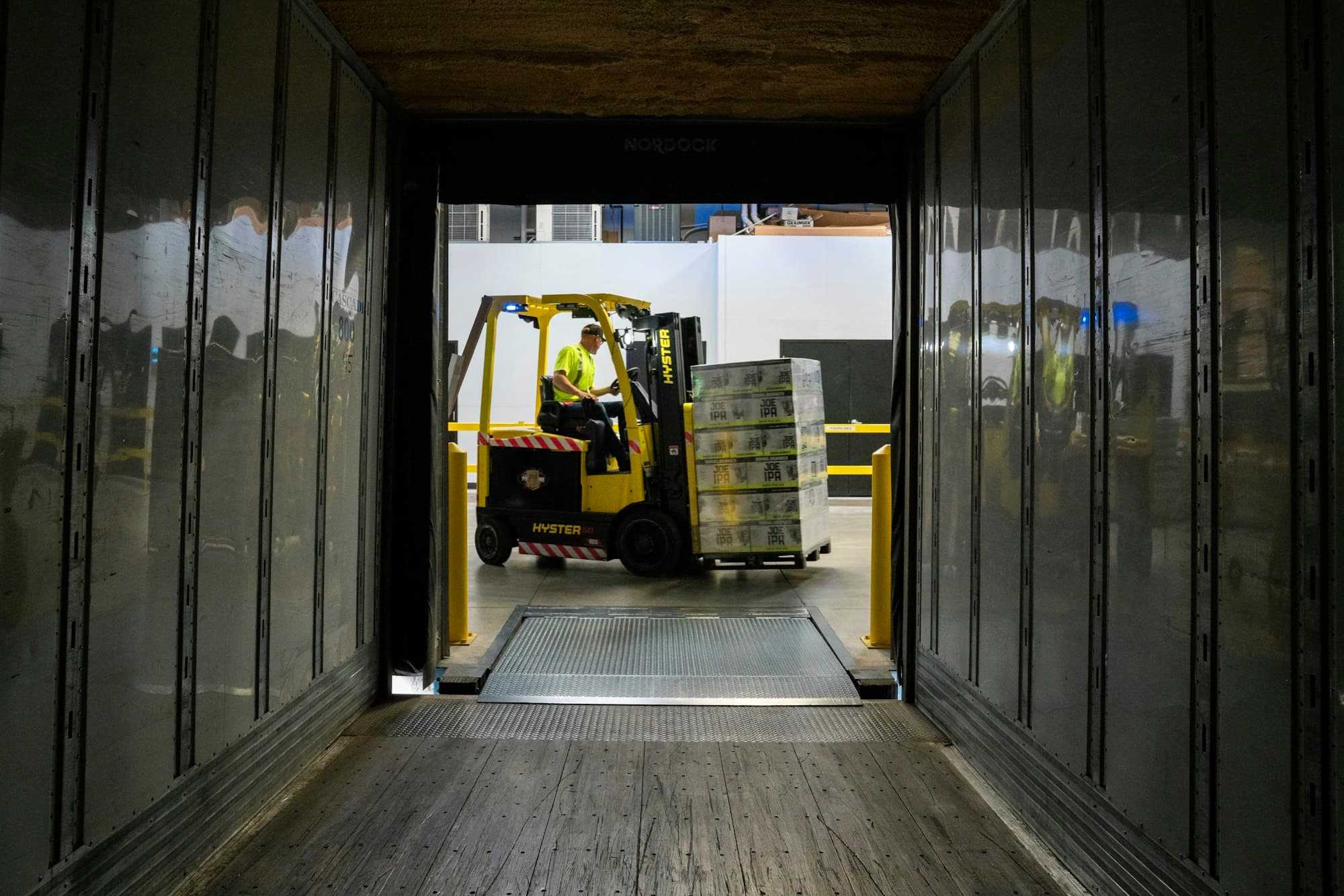
The whole dock on one screen.
Inbound doors
Keel TransportD1
TRL 4410 · unloading, 17 of 28 palletsNorthline FreightD2
TRL 5102 · 22 pallets · waiting to unloadOpenD3
Harrow Lane Trucking booked for 10:30Ashgrove FreightD4
TRL 5329 · unloading, 4 of 18 pallets
On the floor, by destination
Chicago runDoor 9, plan drafted · leaves 14:00
18 18 pallets: 14 On the floor under 12 hours, 4 12 to 24 hoursDetroit MILeaves door 10 at 16:30
15 15 pallets: 12 On the floor under 12 hours, 3 12 to 24 hoursColumbus OHDoor 11, plan drafted
12 12 pallets: 9 On the floor under 12 hours, 2 12 to 24 hours, 1 Over 24 hoursBuffalo NYNext truck 07:00 tomorrow
14 14 pallets: 10 On the floor under 12 hours, 4 12 to 24 hoursMontreal QCNo truck booked
10 10 pallets: 3 On the floor under 12 hours, 3 12 to 24 hours, 4 Over 24 hoursHoldDamaged or short-shipped
5 5 pallets: 5 On hold
Outbound doors
Load plan draftedD9
Chicago run · 3 stopsTRL 5321 · 20 of 26 positions planned · leaves 14:00DetroitD10
TRL 5340 · loading, 6 of 26 positions · leaves 16:30Load plan draftedD11
Columbus12 pallets, 31,400 lb · trailer due 17:30BuffaloD12
Departed 09:40 · 24 pallets
Load planning
Build each truck in stop order, before the forklift moves.
For every outbound trailer, the Planning agent picks the pallets, places them so the last stop goes in the nose and the first stop sits at the doors, and keeps the weight inside the axle limits. The dock lead approves the plan or moves a pallet, and the floor crew works from it.
- Freight that's been waiting longest goes first, unless a delivery window says otherwise.
- Space is held for pallets still being unloaded, so a late inbound doesn't mean a half-empty truck.
- Stop 3 · Joliet IL · 8
- Stop 2 · Chicago IL · 7
- Stop 1 · Gary IN · 3
- Held for Gary · 2
- 38,420 lb
- of 45,000 lb
- 20 of 26
- Positions planned
- 14:00
- Departs
- Joliet goes in the nose because it comes off last
- The heavy drums for Chicago sit over the trailer axles
- 2 positions held at the doors for Gary pallets still unloading at door 1
The floor crew scans. Roadmark tells them where it goes.
Door 1 · unloading17 of 28
PLT 88213-04Prairie Foods1,240 lb · to Gary IN
Load straight ontoDoor 9 · position 19Held for this pallet in the Chicago plan
- 08:00D1Keel Transport · inbound, 28 palletsArrived 07:52
- 09:30D2Northline Freight · inbound, 22 pallets25 min late
- 10:30D3Harrow Lane Trucking · inbound, 16 palletsOn the way
- 14:00D9Ashgrove Freight · outbound, Chicago runPlan drafted
- 16:30D10Ashgrove Freight · outbound, DetroitLoading
- 18:00D11Keel Transport · outbound, ColumbusTrailer due 17:30
Handling, minimums and storage, drafted onto the invoice.
- Handling in and out, per pallet, for the work at each end of the dock.
- Minimum visit fees, so a truck with three pallets still pays for the door, the crew and the forklift.
- Storage after the free time, per pallet per day, so freight without a booked truck shows what it's costing.
- Drafted, then approved: the lines land on the invoice as a draft, for someone on your team to check and approve.
Northline Freight · TRL 5102 · 22 pallets · 30 h on the floor
In the example, Northline Freight's 22 pallets from door 2 leave on Wednesday afternoon, 30 hours after unloading, with 2 rewrapped: CA$264.00 in, CA$264.00 out, 1 day of storage at CA$110.00 and CA$16.00 for the wraps, $654.00 CAD on the example rate card, or CA$29.73 a pallet.
Related free tool: Cross-dock fee calculator
Start with the dock. Keep everything else.
Run just the dock in Roadmark, beside the TMS or WMS you already have. Inbound notices and outbound manifests come and go by EDI, API or email, and you add quoting, dispatch or billing when you're ready.
Questions
Questions about the dock.
What is cross-docking?
Moving freight from an inbound truck to an outbound one, usually within a day, without putting it away in storage. It comes off at an inbound door, is staged on the dock floor by destination and is loaded onto the outbound trailer for its stop. Transloading is the related move between modes or equipment, such as from a railcar onto trucks.
How does Roadmark know what's on the dock floor right now?
It follows freight from the inbound door to the outbound trailer. The dock board shows every pallet staged by destination and coloured by how long it's been waiting, so the freight that's getting old is the first thing you see.
How does Roadmark build an outbound load plan?
The planning agent picks the pallets for each trailer, puts the last stop in the nose and the first stop at the doors, keeps the weight inside the axle limits, and holds positions for pallets still being unloaded so a late inbound doesn't leave a half-empty truck; the dock lead approves the plan or moves a pallet.
How do carriers book dock appointments?
Carriers book their own inbound and outbound door times in the carrier portal, and the dock board shows each appointment's status as trucks arrive.
How does the floor crew know where to put a pallet?
Every pallet is scanned at the inbound door, and the handheld tells the crew which door and position to load it into, updating the board as it moves.
What happens to a short or damaged pallet?
The floor crew reports damage from the handheld when the pallet is scanned at the inbound door, and damaged or short-shipped freight waits in the Hold lane on the dock board, apart from the lanes for each destination, where it stays in view until it's sorted out.
How long should freight sit on a cross-dock?
Ideally less than a day: cross-docking works when freight leaves on the next truck to its destination. The dock board colours every pallet by its dwell time, under 12 hours, 12 to 24 and over 24, so freight that has missed its day stands out before storage charges pile up.
How does Roadmark bill cross-dock fees?
Per pallet in and per pallet out, with minimum visit fees and storage per pallet per day once the free time runs out. The charges are drafted onto the invoice for someone on your team to approve.
Can a freight brokerage use Roadmark for cross-dock freight?
Yes, for a dock the brokerage runs itself: Roadmark can run just the dock, beside the TMS you already use. When the freight goes through a partner's dock instead, the partner's rate card is what you pay, and the cross-dock fee calculator shows what a visit costs against what you charge the customer.
Can Roadmark run just the dock, beside our WMS or TMS?
Yes. Run just the dock in Roadmark beside the system you already have; inbound notices and outbound manifests come and go by EDI, API or email, and you add quoting, dispatch or billing when you're ready.
Thirteen modes, one platform.
Every mode runs on the same customers, loads and invoices, so a company that runs more than one sees them together.
Bring yesterday's dock. We'll plan it live.
Send us a day of inbound and outbound freight. In the call, you'll see the dock board and the load plans Roadmark would have built.
- Your doors, lanes and freight
- Beside your current TMS or WMS
- What it would cost for your dock